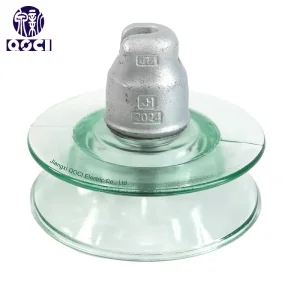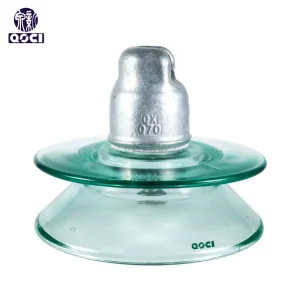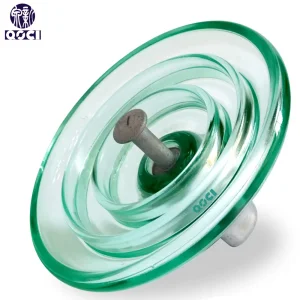
Engineered specifically for optimal electrical insulation and mechanical load bearing in heavy-pollution marine contexts like Metro Manila and the Calabarzon region.
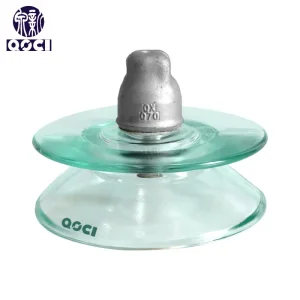
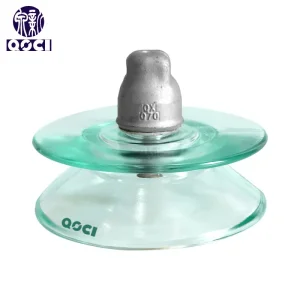
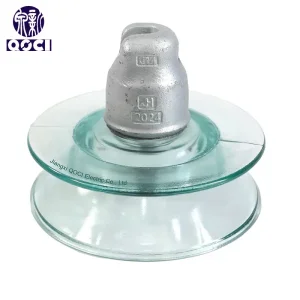
The Metropolitan Manila area, governed heavily by the National Grid Corporation of the Philippines (NGCP) and the Manila Electric Company (Meralco), sits at the intersection of complex high-density industrial growth and harsh tropical maritime conditions. Rapid urbanization and the massive industrial expansion of special economic zones in Cavite, Laguna, Batangas, Rizal, and Quezon (Calabarzon) demand absolute power grid uptime. However, local conditions expose transmission infrastructure to high concentrations of coastal salt spray, industrial chemical soot, and seasonal severe typhoons.
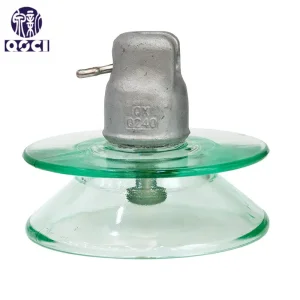
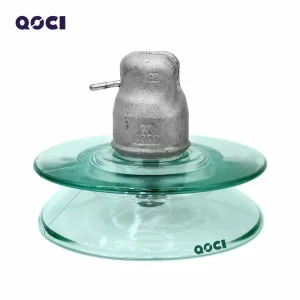
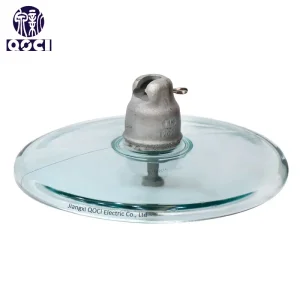
Under these conditions, standard distribution and transmission insulators suffer from flashovers due to high Equivalent Salt Deposit Density (ESDD). Double-shed type glass insulators provide a vital technical countermeasure. The external double-shed geometry dramatically increases the creepage path without lengthening the overall string, offering maximum self-cleaning capability under torrential rain conditions.
In electrical transmission, preventing pollution-induced flashovers is a battle against surface conductivity. Double-shed units introduce optimized spatial barriers to disrupt potential tracking paths.
By eliminating closely nested under-ribs characteristic of traditional fog profiles, the double-shed pattern allows wind to flow smoothly along its outer surfaces. This reduces micro-eddies that cause airborne particulates to deposit underneath the glass shell.
The double-wing configuration provides a massive creepage-to-spacing ratio. This allows engineering teams to implement fewer insulator disks in high-voltage tension and suspension strings, reducing structural weight and structural tower loading.
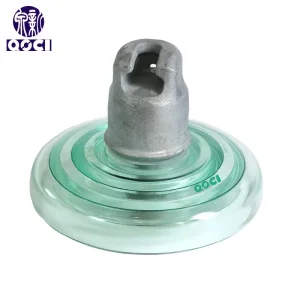
Toughened suspension glass features uniform thermal stresses and highly predictable mechanical performance. Even if a shell gets damaged, the remaining glass stub remains structurally intact to hold transmission loads safely.
Founded in December 2002, with a registered capital of 508 million Yuan, Jiangxi QOCI Electric Co. Ltd is a modern power transmission equipment powerhouse located in the Industrial Park of Luxi County, Pingxiang, Jiangxi Province. Spanning 70,000 square meters, our facility integrates high-precision glass processing, advanced metallurgy, and strict state-of-the-art laboratory testing.
We supply reliable insulation solutions globally, emphasizing research, safety, and operational excellence for high-voltage and ultra-high-voltage AC/DC lines.
Our double-shed glass units are targeted for critical infrastructure sectors across Metro Manila and surrounding provinces.
Substations and transmission line spans along Manila Bay (Pasay, Manila, parts of Cavite, and Bataan) are consistently exposed to high-density marine salt spray. Our U120BD and U160BD double-shed profiles provide an extended creepage distance per unit, mitigating leakage current and ensuring operational safety without constant washing cycles.
Luzon's industrial corridor (Laguna Technopark, First Philippine Industrial Park in Batangas) experiences rapid development. Combined with heavy highway particulate pollution, the local transmission network demands insulators that resist dry-band arcing. Our anti-pollution double-shed configuration is critical for maintaining supply reliability to automated manufacturing plants.
Strong typhoons frequently cross the Bicol region and Southern Tagalog before reaching Manila. Suspension and tension strings utilizing toughened glass insulators with 160kN to 300kN mechanical failing loads ensure overhead line integrity under extreme mechanical stresses.
Grid expansion projects in the Philippines must comply with the Philippine Electrical Code (PEC) and the standards set by the Energy Regulatory Commission (ERC) and the National Transmission Corporation. Jiangxi QOCI Electric products conform strictly to internationally recognized standards:
These compliance certifications ensure seamless integration into NGCP's 138kV, 230kV, and 500kV networks.
As grid voltages transition higher and modern smart grids demand higher reliability, standard materials face performance limitations. QOCI is driving research into advanced insulation composites and surface enhancements:
Room Temperature Vulcanized (RTV) silicone coatings applied to toughened glass combine the structural resilience of glass with the hydrophobic surface properties of silicone, offering excellent performance in high-pollution areas.
Iterative updates to shed profiles using finite element aerodynamic simulations optimize high-velocity wind self-cleaning, preventing dust build-up during dry seasons.
Explore our complete range of standard, aerodynamic, and double-shed insulators engineered for high mechanical strength and reliable electrical insulation.
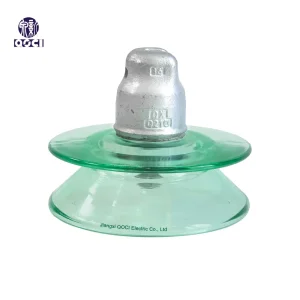
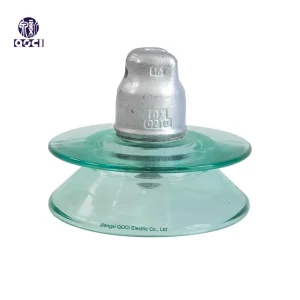
Expert answers regarding Double-Shed Cap and Pin Toughened Glass Insulator operations, mechanical performance, and project application guidelines.
Coastal regions present high Equivalent Salt Deposit Density (ESDD) due to sea breezes. The double-shed profile features a wider gap between the upper and lower glass wings. This geometry minimizes the chance of salt-laden water bridging the insulating distance. Furthermore, the smooth aerodynamic surface facilitates natural self-cleaning by heavy monsoon rains and wind, reducing dry-band arcing hazards.
Toughened suspension glass insulators offer excellent visual diagnostics: when a failure occurs due to electrical or mechanical overload, the glass shell shatters into small fragments while the remaining steel pin and cap remain structurally intact. This preserves the mechanical load string, preventing dropped conductors and simplifying line maintenance compared to ceramic units, which may develop undetected micro-fissures.
According to IEC standards, areas categorized as Class IV (Very Heavy) pollution level require a minimum specific nominal creepage distance of 31 mm/kV. Double-shed type units are specifically engineered to maximize the path distance within a compact physical spacing, allowing developers to meet these strict safety parameters without adding unnecessary weight to overhead line systems.
Yes. Room Temperature Vulcanized (RTV) silicone coatings can be applied directly to toughened glass surfaces. This creates a hybrid solution combining the mechanical durability of toughened glass with the hydrophobic properties of silicone, offering excellent performance in heavily polluted industrial or marine environments.