
Engineered for high-pollution coastal areas and mountainous alpine environments.
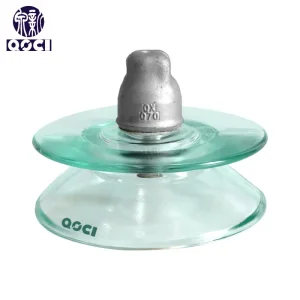 Wholesale U70BLD External Double-shed Type Glass Insulators - IEC Standard for Romania High Voltage Lines
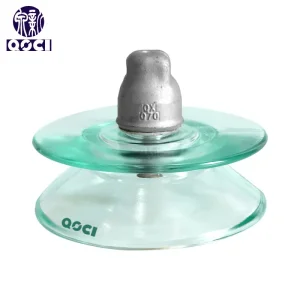 Romania Two-Winged Fog Type Glass Suspension Insulators Psd 70 E Type - Advanced Pollution Control
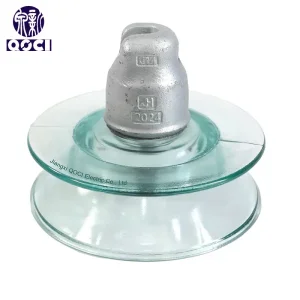 Wholesale 100kN U100BD Double-Shed Type Glass Insulators - IEC Compliance for Transylvanian Alpine Grids
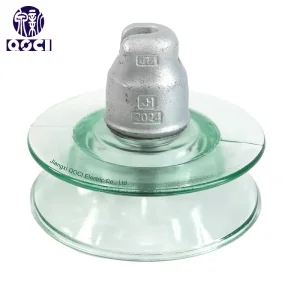 High-Quality 120kN U120BD Double-Shed Type Glass Insulators - High Load Capacity for Constanța Wind Power Interconnection
Romania stands as a critical energy hub in Southeastern Europe, currently undergoing a massive grid transformation driven by the European Green Deal and the REPowerEU initiative. The National Transmission System Operator (TSO), Transelectrica, is actively expanding high-voltage (HV) and ultra-high-voltage (UHV) networks to integrate renewable energy sources from the Dobrogea region and offshore wind potential in the Black Sea. This transition demands hardware that can withstand complex climatic stressors—from the saline humidity of the Black Sea coast to the severe icing and thermal fluctuations of the Carpathian Mountains.
The Romanian industrial sector, encompassing heavy automotive manufacturing (Dacia-Renault, Ford), metallurgy, and chemical processing, requires a highly stable power supply. Any voltage fluctuation or flashover on transmission lines leads to significant economic losses. Consequently, procurement strategies are shifting from "lowest initial cost" to "Life Cycle Cost (LCC) optimization," where the durability of toughened glass insulators is prioritized over traditional porcelain alternatives.
Advanced Production Base
Annual Supply Capacity
Senior Electrical Engineers
Patented Insulator Technologies
Double-shed type glass insulators are specifically designed to address the challenges of Pollution Flashover. In the Romanian context, particularly near the industrial hubs of Ploiești or the coastal regions of Constanța, solid pollution (dust, chemical deposits, and salt) accumulates on the insulator surface. When combined with light rain or fog, this creates a conductive layer, leading to electrical breakdown.
Handling heavy ice loading and extreme cold in the Făgăraș Mountains.
Resisting salt spray corrosion and humidity in Black Sea offshore wind projects.
Anti-pollution performance for 400kV lines serving heavy metallurgical clusters.
Supporting Romania-Moldova and Romania-Hungary interconnection reliability.
As a leading Chinese manufacturer, Jiangxi QOCI Electric Co. Ltd offers the Romanian market a unique combination of high-tech production and cost-effective scaling. With a registered capital of 508 million Yuan and over two decades of specialization, we bridge the gap between European quality standards and global supply chain agility.
1. Total Oxygen Kiln Technology: Our manufacturing process utilizes advanced oxygen-fuel combustion, ensuring superior glass purity and thermal stability compared to traditional methods.
2. Stringent Quality Testing: Every batch undergoes high-voltage electrical tests and mechanical load tests that exceed IEC 60305 and ANSI standards.
3. Fast Delivery & Localization: We understand the project timelines of EU-funded infrastructure. Our logistics network ensures that large-scale orders reach Romanian ports like Constanța with optimized transit times.
Yes, all our products are designed and tested according to IEC (International Electrotechnical Commission) standards, which are the basis for Romanian grid specifications. We provide full type-test reports from independent laboratories.
The open profile of the double-shed design prevents "ice bridging"—a phenomenon where ice connects the sheds of an insulator, causing a short circuit. The larger spacing between the sheds ensures air gaps remain effective even under moderate icing.
Our insulators are designed for a service life exceeding 40-50 years. Toughened glass is immune to the aging effects of UV radiation and thermal cycling, which often degrade composite/polymer insulators.
Absolutely. We offer a range of profiles including anti-fog and triple-shed types to meet specific milligram-per-square-centimeter (mg/cm²) pollution requirements defined in your project specifications.
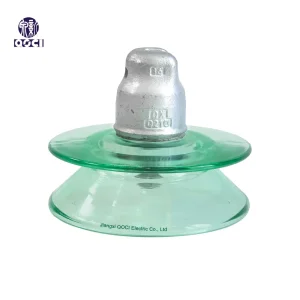 Wholesale 160kN U160BD Double-Shed Type Glass Insulators - Heavy-Duty Transmission Solutions
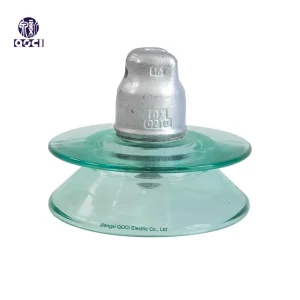 High-Quality U210 Anti-Fog & Double-Shed Electric Insulator - Premium Choice for Bucharest Suburban Grids
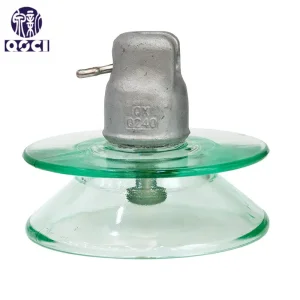 High-Quality U240BD Toughened Double-Shed Glass Electric Insulator - Specialized for 400kV Romania-Bulgaria Interconnects
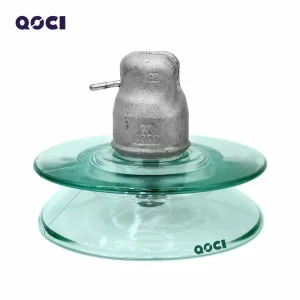 China U300BD High Voltage Cap and Pin Type Double-Shed Glass Insulator - Ultra-High Strength for River Crossings
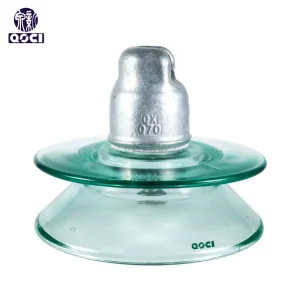 China PSD-70E 112V External Shed Glass Insulator - Distributed Power Grid Optimization
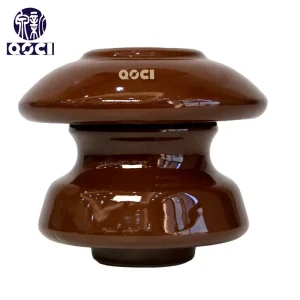 China ANSI Standard Shackle Insulator ED-2b - Low Voltage Distribution for Romanian Rural Electrification
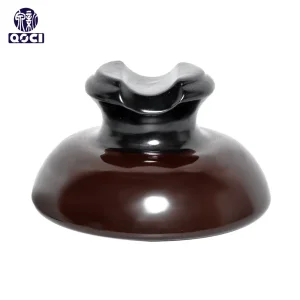 High-Quality ANSI 55-5 Porcelain Pin Type Insulator - Reliable Performance for Distribution Substations
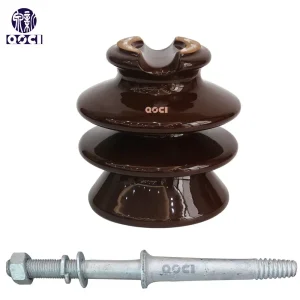 High-Quality 11kV Porcelain Insulator P-11-Y - Standardized Distribution for Romania Commercial Parks
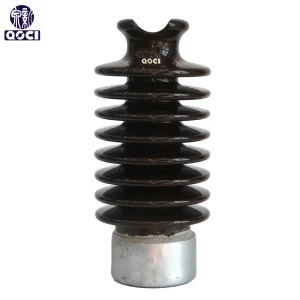 Wholesale ANSI 57-3 High Voltage Tie Top Porcelain Line Post Insulator - substation Support Efficiency
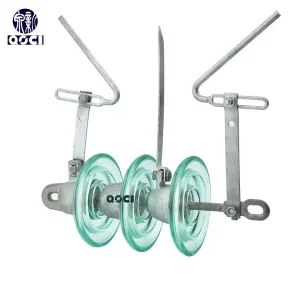 High-Quality Tempered glass insulators CTV254 Axis 14 & 16 - Precision Engineering for Heavy Loading
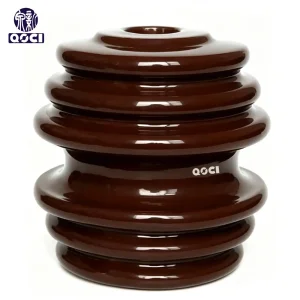 High-Quality ANSI 53-5 Spool Insulator Suppliers - Durable Low Voltage Secondary Line Hardware
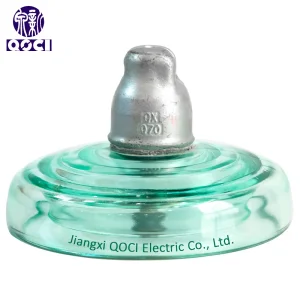 High-Quality 70kN U70bp/U70blp Anti-Pollution Fog Type Glass Insulator - Optimized for Danube Delta Salinity
Connect with our technical team for a comprehensive project assessment and customized quotation for the Romanian market.